「そういうおまえをワシゃ喰った」。
“I have eaten such you.”

Gallery PARC
〒602-8242 京都府京都市上京区皀莢町287
堀川新文化ビルヂング2階
Gallery Site >
◯ 地下鉄烏丸線「丸太町」・「今出川」駅より徒歩約20 分
◯ 地下鉄東西線「二条城前」駅より徒歩約18 分
◯ 京都市バス「堀川中立売」バス停下車徒歩1 分


「いかに大きなものを喰ったか」
というホラで競い合う村人たちがいた。
あるものは「家」を喰ったと言い、あるものは「山」を喰ったと言い、そしてあるものは「海」を喰ったと言い…
村人たちのホラはしだいに大きくなっていくが、ある男の喰ったものがいちばん大きいということで決着がつき、最後にその男は、寺の和尚と勝負をすることになった。
寺に出向いた男は、先手をうって必勝のホラを言い放つ。
「おれは『暗闇』を喰った」
しかし、和尚は即座にこう切り返す。
「そういうおまえを、ワシゃ喰った」
《展覧会によせて》
「そういうおまえをワシゃ喰った」
これは昔、私が小学生の時に図書室で読んだ小噺のさげの一言です。この和尚はただのまぜっ返しジジイとも取れますが、私には人の思念がもつ壮大さと肉体の物質的な矮小さを同時に言い得た哲学的示唆のように感じたものでした。
「人間死ねば糞袋」とも言います。そういった死生観、“人類は小さな球の上で”、”空気の底”にへばりついて、宇宙138億年の一刹那だけ現れて消えるだけの存在でしかないという中二病的世界観が、私の制作の根底に脈づいていることは否めません。
小噺では、無限の「概念」で無双を誇った男が「肉の塊」として和尚に喰われてしまうというオチになっていますが、それさえも和尚の"ホラ話"でしかなく、そしてさらに、それ自体が創作された"小噺"であるという、入れ子のような三段オチになっているのがなんとも粋に感じます。
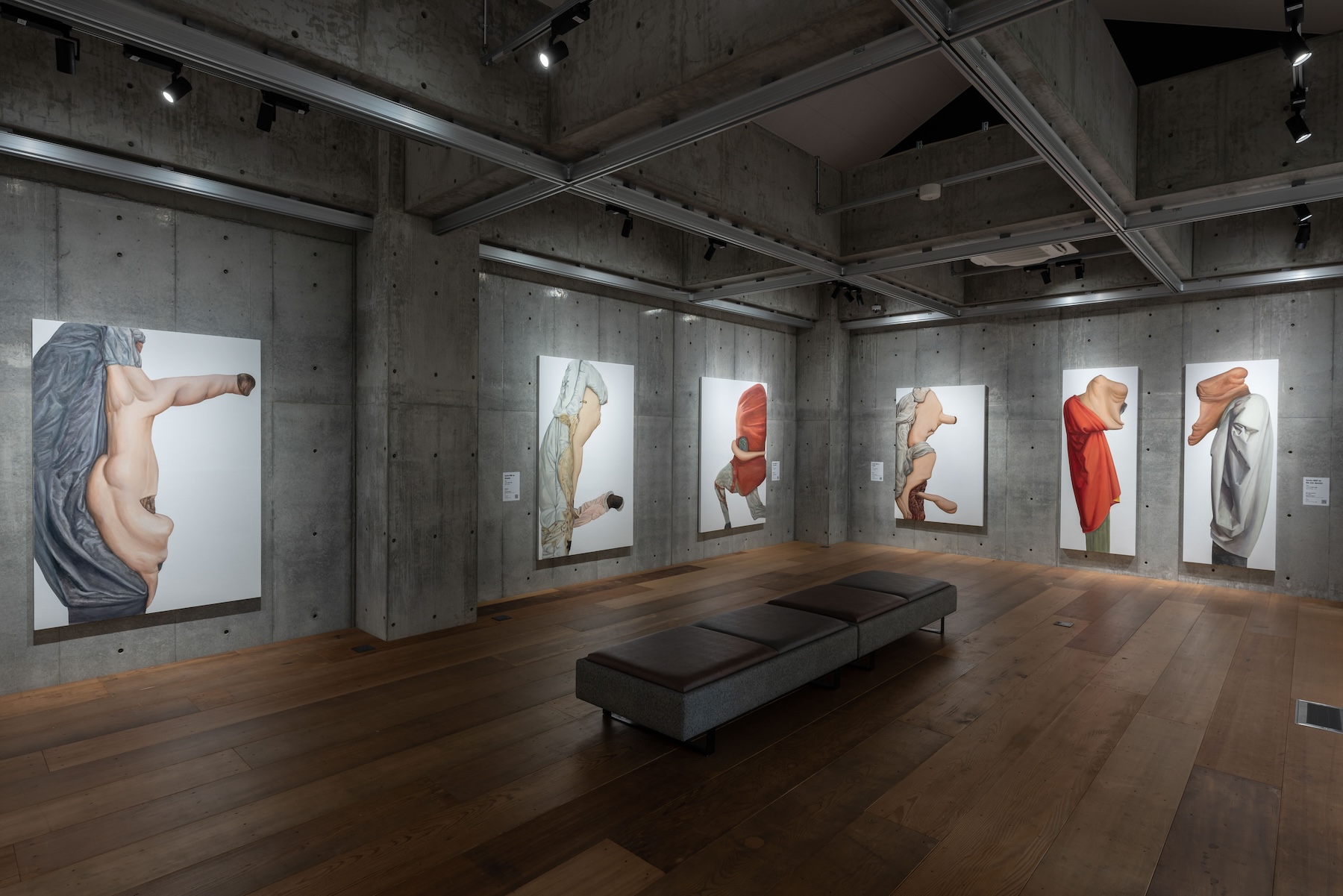
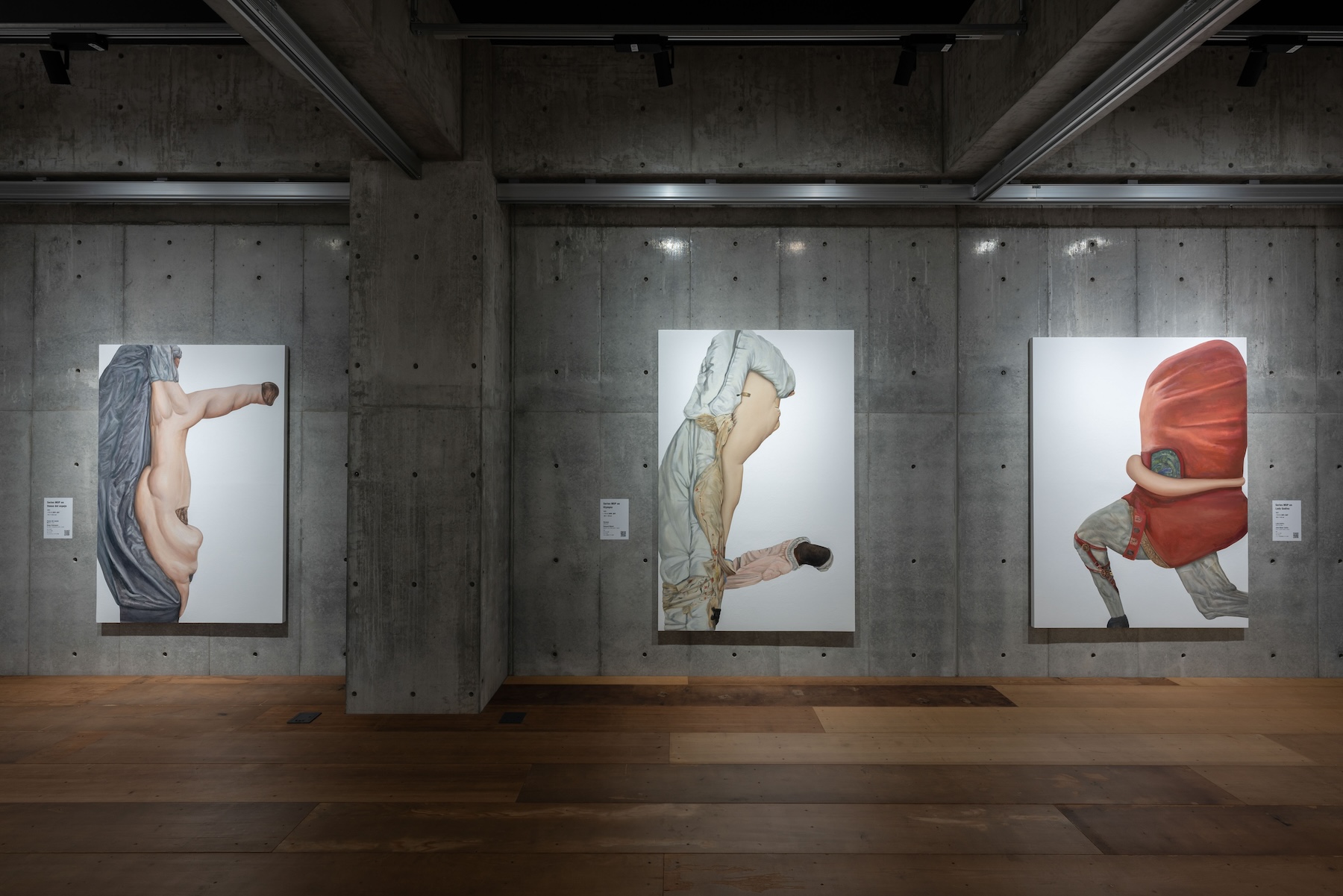
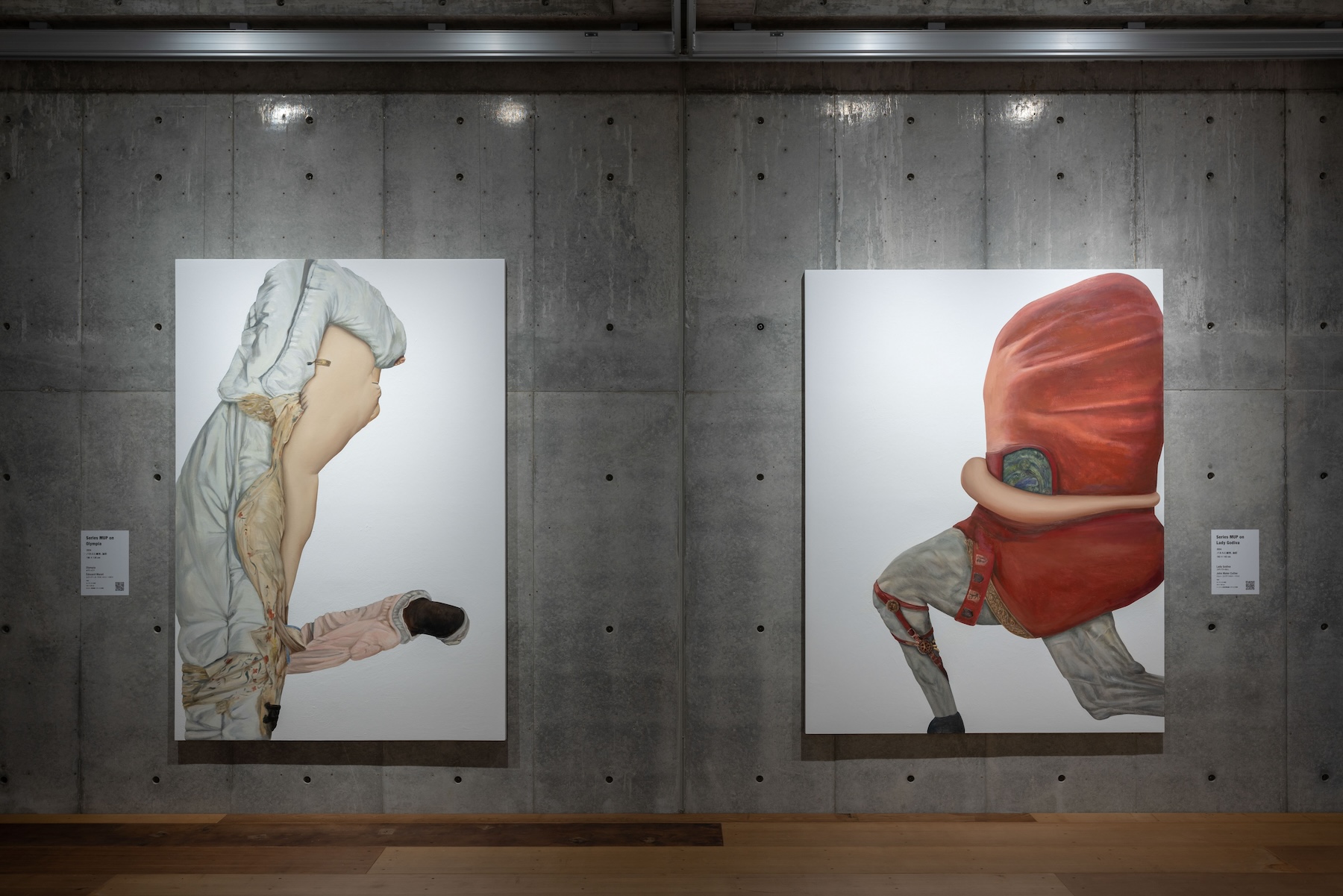
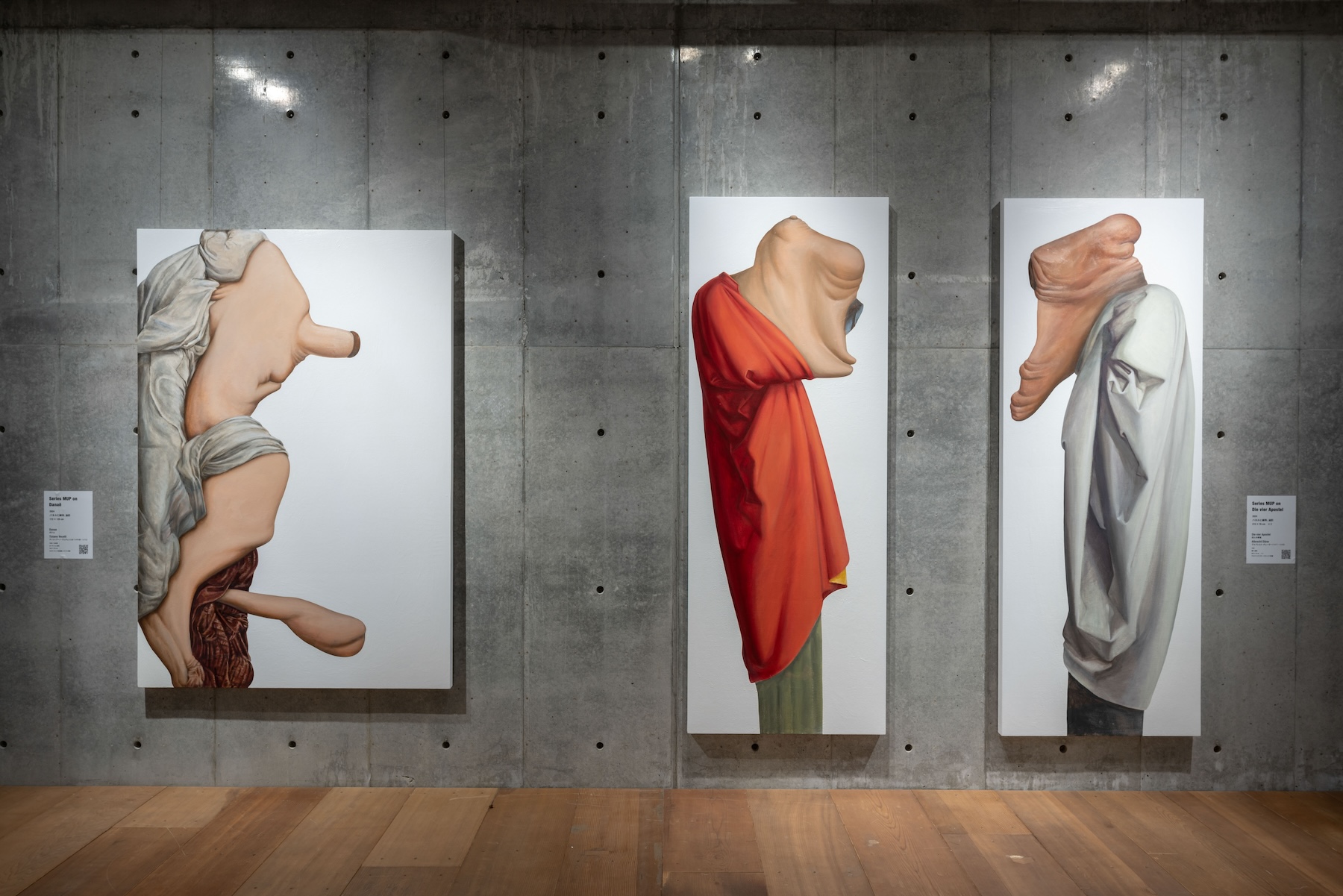
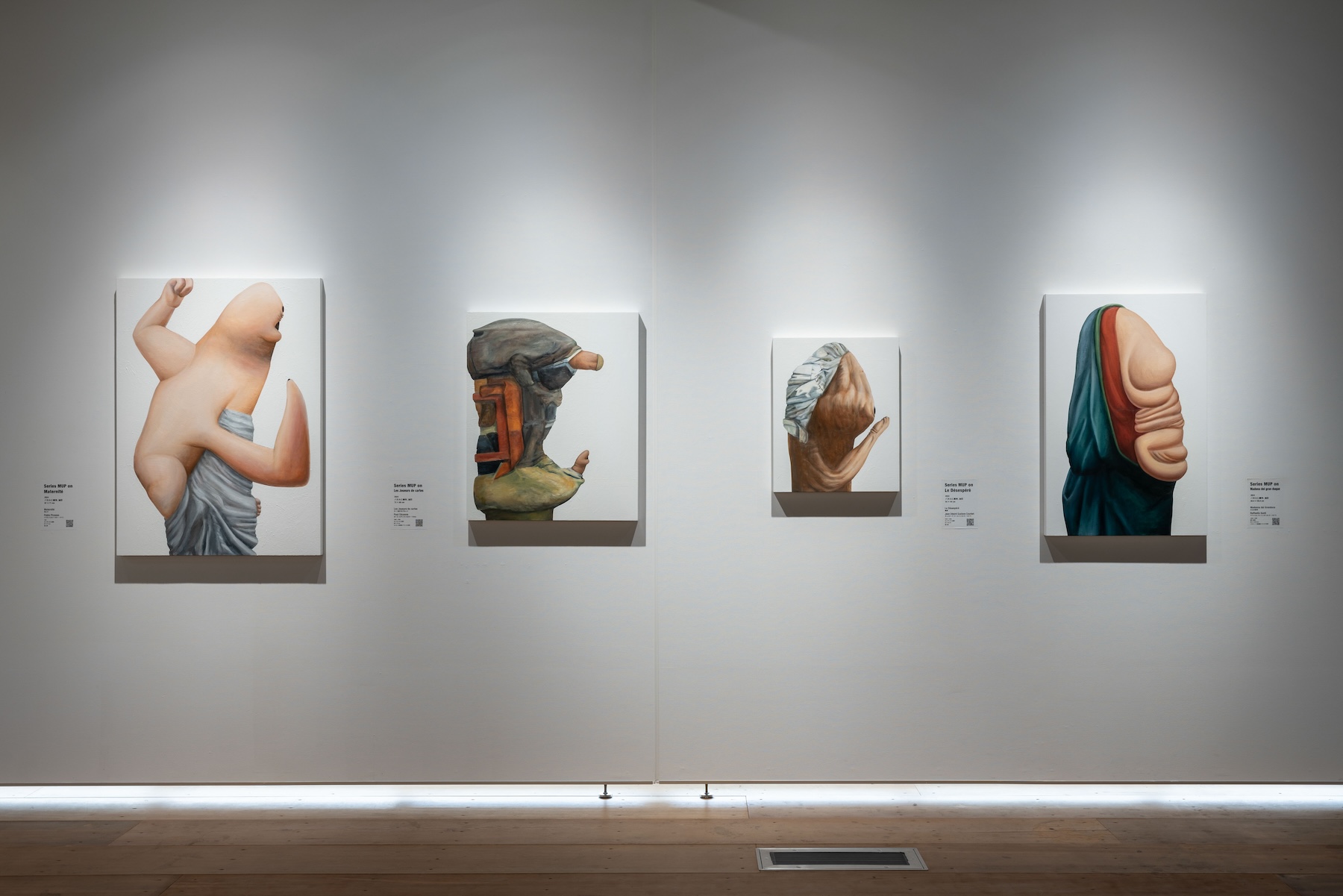
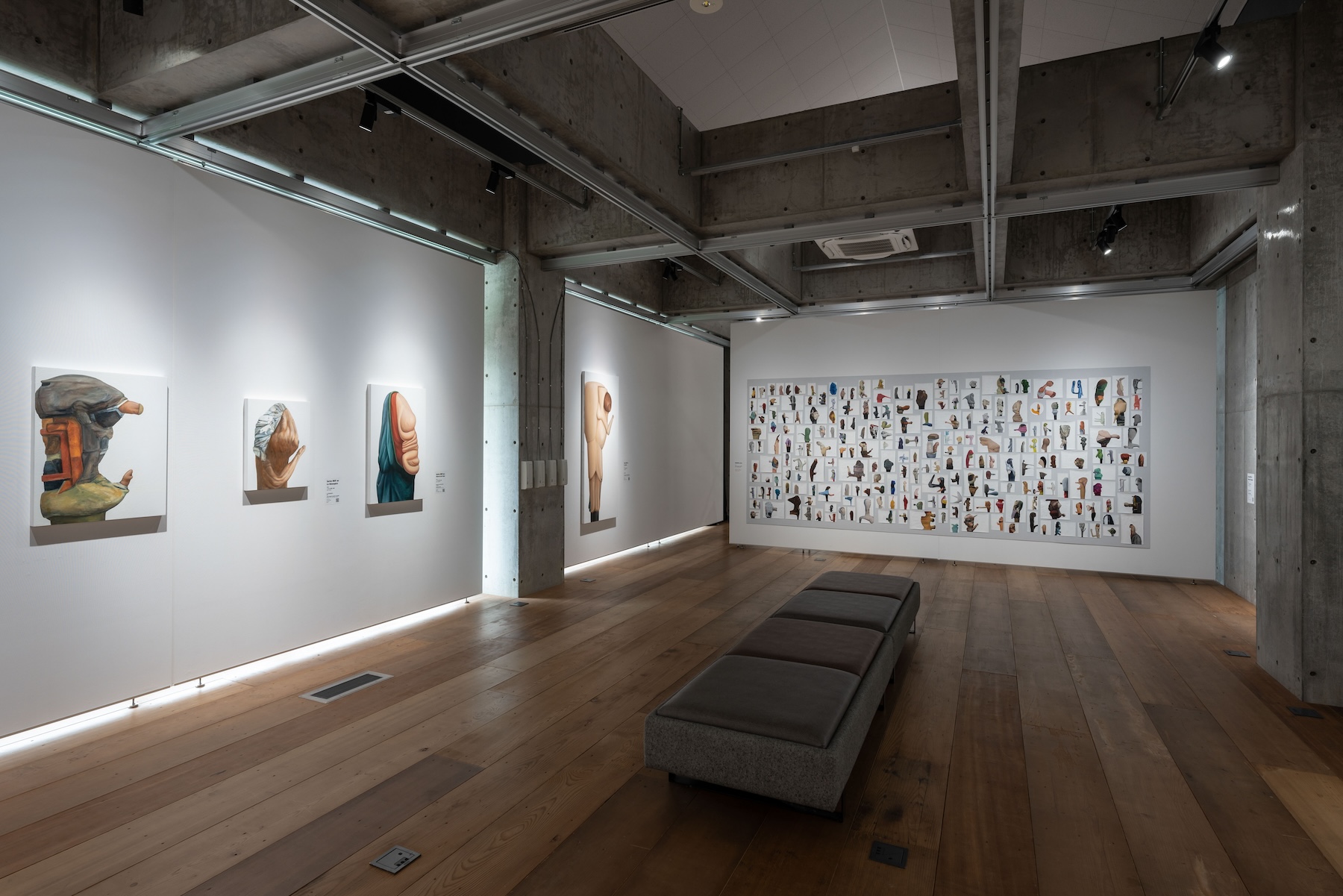
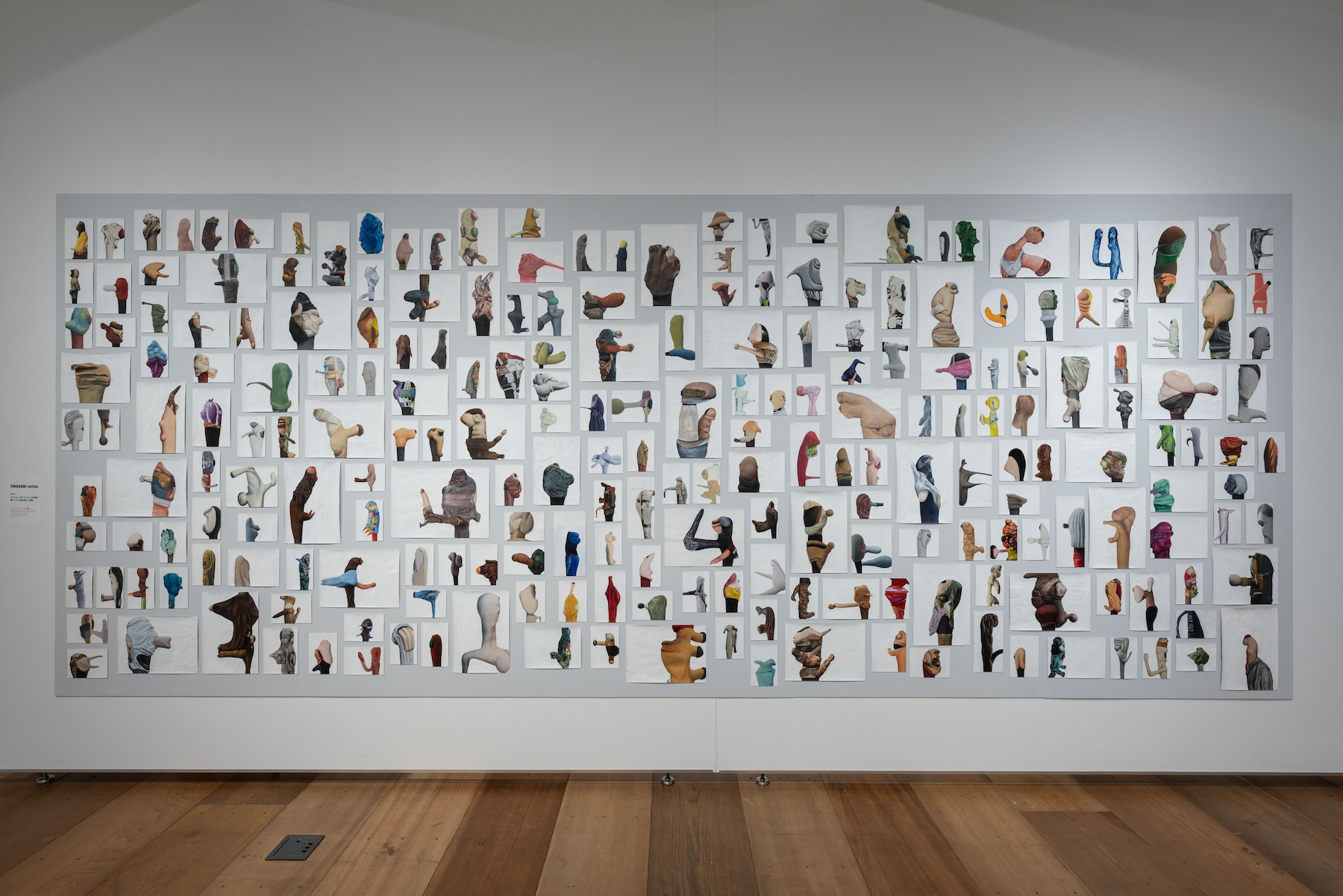
ウワガキシリーズは、他人の展覧会DMや名画のポストカードなどに直接加筆して「グチック」に描き変えてしまうという非道なまぜっ返しの手法によってできた作品郡です。ポストカードに元々描かれていた作品は、鑑賞者としての私にとってはリスペクトであり、作品自体が素晴らしく、個人的に大好きなものもあります。しかし同時に、ウワガキを施す私にとってはただのグチックの一部、肉の断片にしか見えていません。もとに何が描かれてあったのか、何を語ろうとしていたのか、意匠に込められた諸々の思念や主張は無効化され、ただの"絵に描いた餅"であるという事実が、絵具を載せることで容易に描き変えられてしまうというプラグマティックなオチに収束します。そしてさらには、描かれた「グチック」自体、所詮支持体にへばりついた絵具でしかなく、"絵に描いた餅"=イメージでしかありません。しかしそのイメージが、観る者をちょっと気恥ずかしくさせたり、妙な背徳感を伴いつつ視線を釘付けにしてしまう、憎らしくて愛おしいラスボスの本体でもあります。
今回出品の名画ウワガキシリーズでは、いよいよ元になる名画の「実寸模写」に手を出してしまいました。今まで散々、人が丹精込めて描いた絵を(印刷の上とはいえ)弄んできたツケが回ってきたようにも思います。過去の巨匠たちが描いてきた名画を寸分まで凝視して模写をすることは、描画スキルにおいて勉強になったものの、とにかく面倒な作業でした。そうして苦労して描いた立派な人物画を自分の手で潰して描きかえてしまうのはたしかに勿体ないものでしたが、その背徳感とスリルはどこか病みつきになる毒饅頭のごときものでもありました。加えて永年ウワガキ加害者だった私は、今回半分だけウワガキ被害者の側にも立ったことで、勝手に禊を済ませたような気分になっています。
次の制作のことを考えると、もう本物の作品そのものにウワガキしてしまうという手段しか残されていないような気がしてきて、ハッと我に返り、踏みとどまっている現状があります(というのは嘘です)。
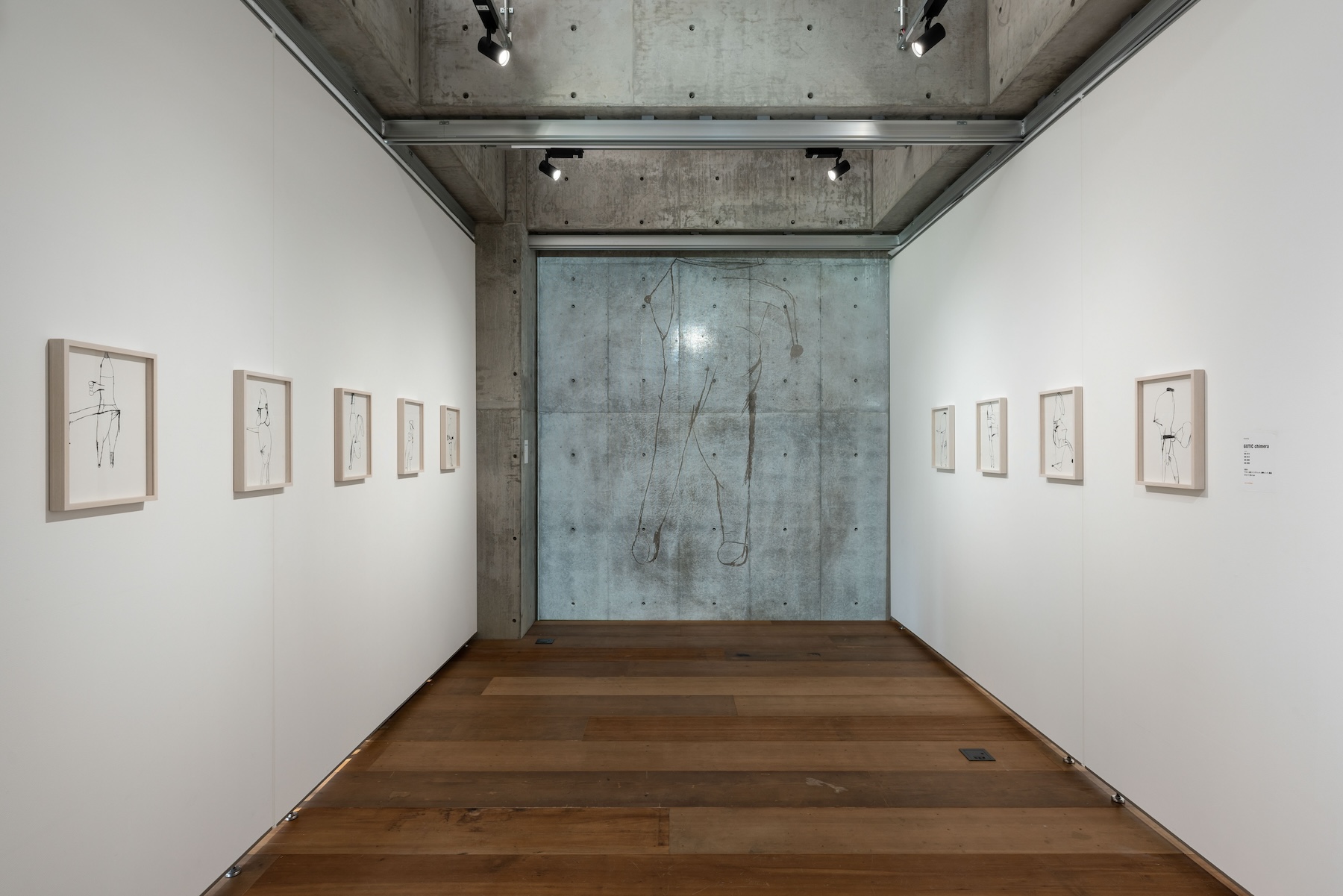
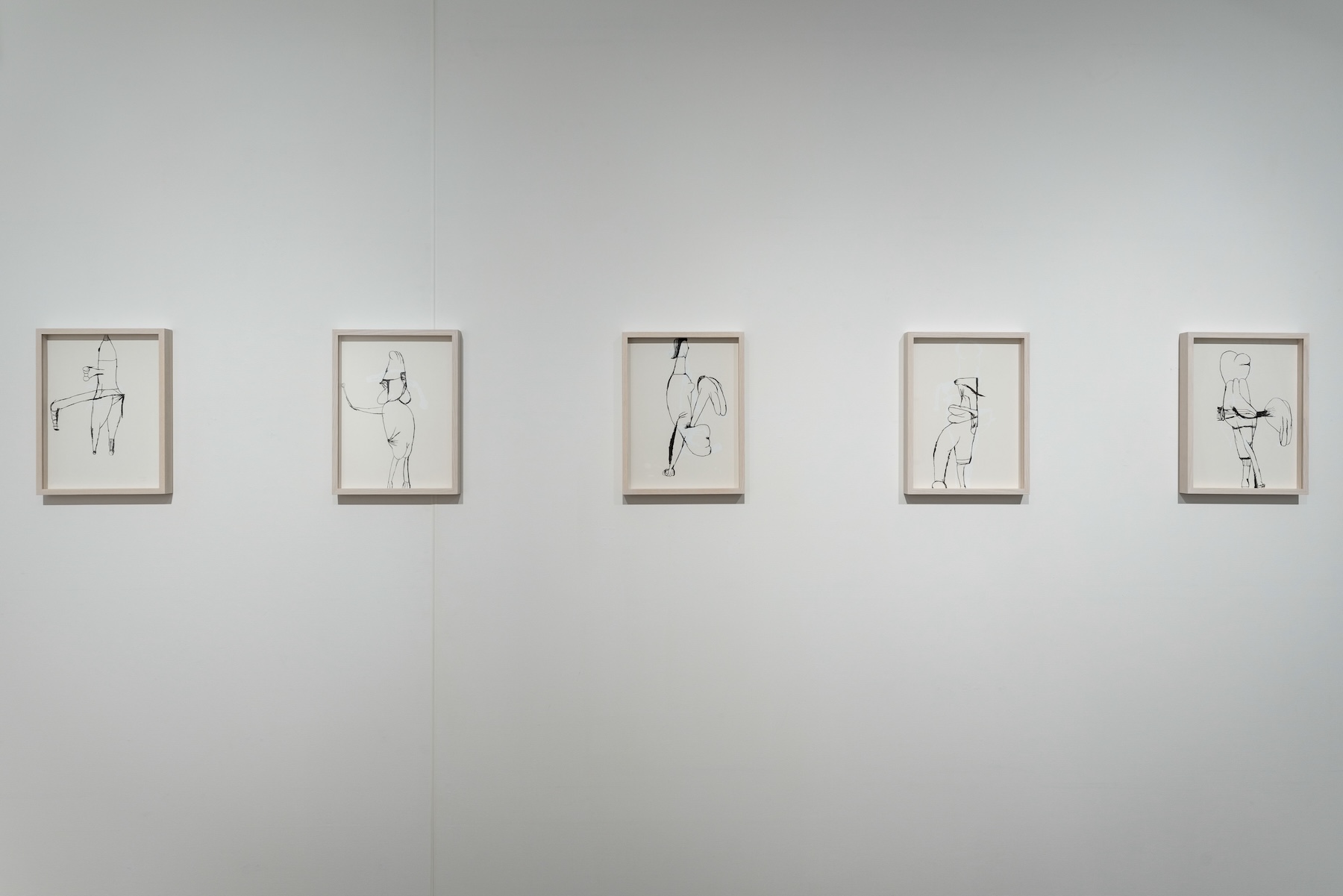
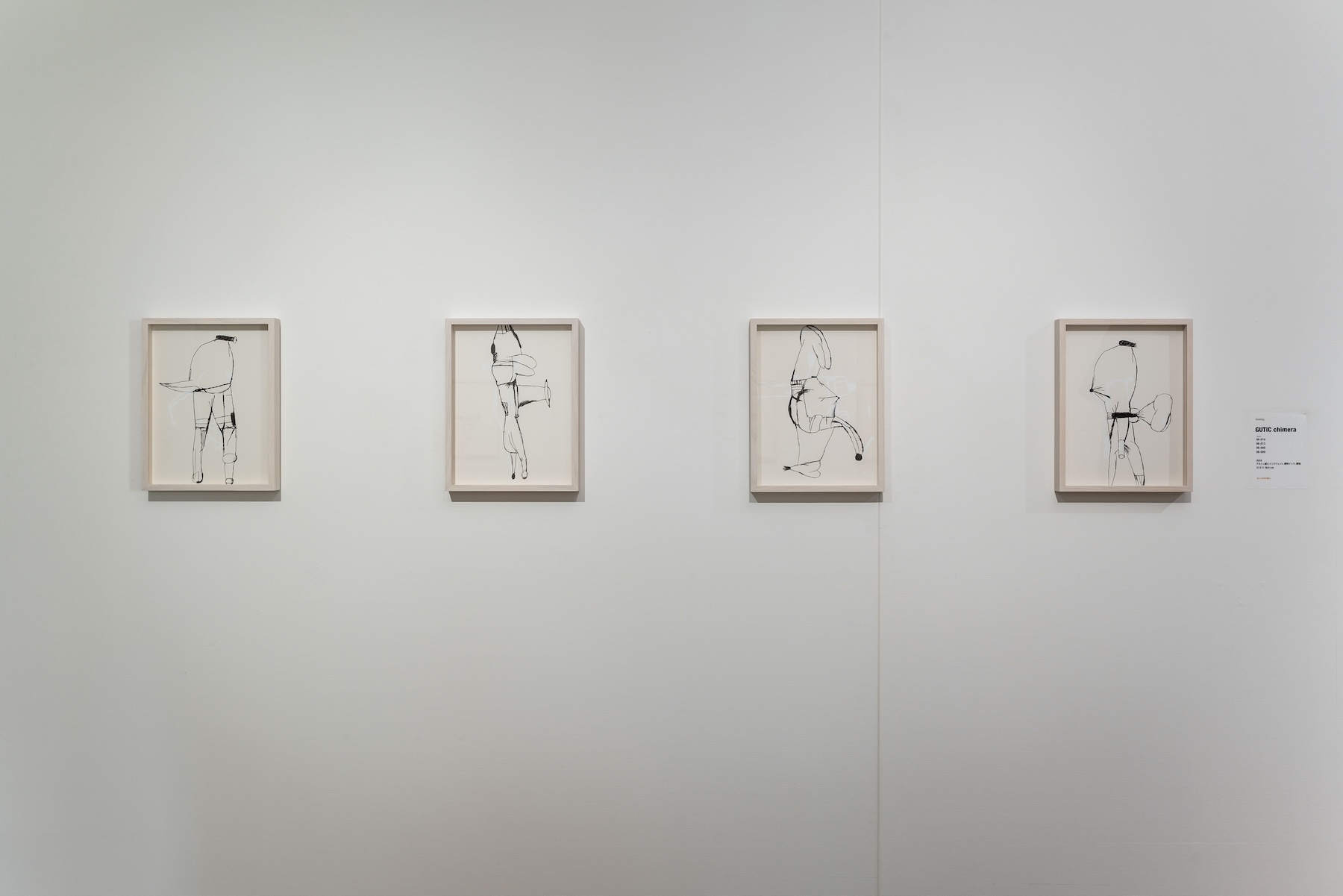
今回の展示では、そのウワガキの集大成に加え、本来の代表的シリーズ、線のドローイング映像作品Unlimited Drawingと、描き変わっていくカタチを合成加筆して現れてきたchimeraドローイング(初出)も出品します。
どちらのシリーズも、描く行為と描かれたイメージが入れ子に反転しながら見えてきますが、そんなことは横において、それぞれの画面に現れてきた「グチック」が放つ、切実で珍奇なリアリティを楽しんでもらえたらと思っています。
山岡敏明
[English Statement]
"How big a thing I have eaten"
was a boastful competition among villagers.
One claimed to have eaten a "house," another a "mountain," and another a "sea"...
The villagers' exaggerations grew progressively larger, eventually leading to a contest between the champion and the abbot of a temple.
The man, visiting the temple, preemptively declared his winning boast:
"I have eaten 'darkness.'"
However, the abbot immediately retorted:
"I have eaten such you."
<Note on the Exhibition>
"I have eaten such you."
This is the punchline of a short tale I read in the school library when I was in elementary school. While this abbot might be dismissed as a simple troublemaker, I interpreted his words as a philosophical suggestion that simultaneously captures the grandeur of human thought and the physical smallness of the body.
There is a saying, "When a human dies, they become a sack of excrement." It is undeniable that this view of life and death, this adolescent worldview where "humanity is stuck to the surface of a small sphere" beneath "a bottom layer of air," merely appearing and vanishing in a brief instant of the universe's 13.8 billion years, beats at the core of my art practice.
In the tale, the man who reigned supreme with the infinite "concept" is finally eaten as a "lump of flesh" by the abbot. Yet, even this is merely the abbot's "tall tale," and the entire narrative structure is an exquisite three-layered nesting doll, being a manufactured "short tale" itself.
The "Uwagaki" (Overwriting) series comprises works created through the outrageous, mischievous technique of directly adding to (or "overwriting") other people's exhibition flyers or postcards of famous paintings, transforming them into "Gutic." The original works depicted on the postcards are, to me as a viewer, objects of respect; some are personally beloved pieces of incredible quality. However, to me, the one doing the overwriting, they are merely part of the Gutic, a fragment of flesh. The thoughts and claims embedded in the original artwork—what was depicted, what it tried to convey—are neutralized, converging into the pragmatic punchline that the original is just "a rice cake drawn in a picture," easily overwritten by loading paint onto it. Furthermore, the resulting "Gutic" drawn itself is merely paint stuck to a support—a rice cake drawn in a picture, an image, nothing more. Yet, this very image is the real core of the hateful, yet lovable final boss, capable of making the viewer feel slightly embarrassed and fixing their gaze with a strange sense of sinfulness.
In the present exhibition's "Masterpiece Overwriting Series," I finally ventured into creating "full-scale replicas" of the original famous paintings. I feel that the consequences of years of tampering with others' meticulously crafted works (even if they were just prints) have finally caught up with me. While meticulously copying the masterpieces painted by the old masters was instructive for my drawing skills, the process was undeniably tedious. It felt truly wasteful to then proceed to deface and redraw those impressive portraits with my own hands, yet the accompanying sense of transgression and thrill was akin to a poisonous manju (sweet bean bun) that becomes addictive. Furthermore, having long been the perpetrator of the overwriting, I now feel partially absolved by having stood on the side of the overwriting victim.
Contemplating my next production, I'm left with the distinct, startling feeling that the only option remaining is to overwrite an actual, original artwork itself, which forces me to stop myself (that's a lie, of course).
This exhibition presents the culmination of the Uwagaki series, alongside my original flagship series, the drawing video work *Unlimited Drawing*, and the *chimera drawing* (debut), which emerged from synthesizing and retouching the evolving forms. In both series, the act of drawing and the drawn image flip into nested reflections. Regardless of that, I simply hope that the viewer can enjoy the urgent, bizarre reality emanating from the "Gutic" that has appeared on each screen.
Yamaoka Toshiaki